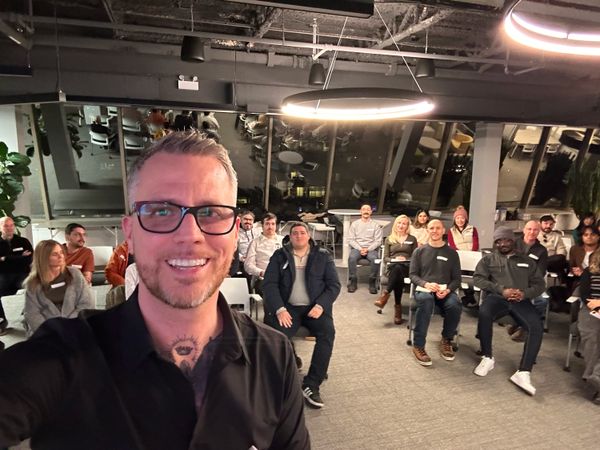
Most requests for UX help start with the same phrase
I hear a version of it from most of the organizations that come to me: "We need our UX fixed." Something changed in their product, customer feedback came in, or someone in leadership decided it was time to take the digital experience more seriously.
It's a reasonable place to start. UX is a word they've heard, and it points at something real. So the first conversation is about what they mean by it. What have they noticed, and who noticed it?
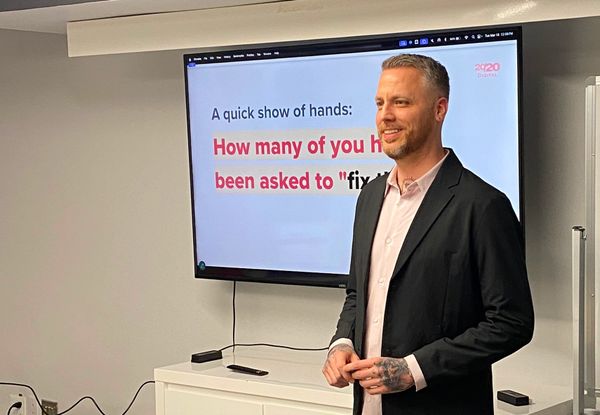
In my experience, people often assume UX lives inside the UI. UX goes well beyond the screens: understanding what people need, how they behave, where they need support, and how that lines up with what the organization needs to achieve. It also includes the internal teams who support those people, since their experience shapes what customers get.
Across the product and marketing teams I've worked with, UX responsibilities regularly land with people who have never had a proper introduction to it.
AI tools put design output in even more hands. Anyone can generate screens, copy, or a UX strategy in minutes, and more people contributing is a good thing. It also makes a common grounding more valuable, so everyone involved can contribute with confidence.
AI output is a useful starting point when a team can judge it
I've started projects where AI-generated content, visual designs, or product screens were handed to me as the starting point. The output can be impressive at first glance, and it's a useful place to begin. Sometimes it holds up with only light changes. What gives it value is a team that knows what good looks like for their product and can tell when something deserves a closer look before it ships.
That judgment is harder for the people closest to a product. They know where everything is, so they can't easily see it the way a first-time user does, and tasks that feel simple to them can be harder for someone new. A fresh perspective helps, and so does stepping outside your own role for a while. One developer in my UX training described it this way: "As a software developer, it has really helped to step out of my functionality bubble and get a new perspective."
The same skill came up at home when I worked with my son on judging what AI tools gave him. He was trusting how the output looked, not what it said.
Designers do their best work when the whole team takes part in decisions
On one project I consulted on, a dedicated UX designer was expected to deliver finished screens for development, quickly and on repeat. The team needed screens, so that's what the role became. There was little room left for the research and thinking the screens were meant to rest on, and the rest of the team didn't yet have the grounding to ask for it.
A designer contributes most when the team takes part in the judgment calls, not only when it's waiting on the next screen. Outside support works the same way. When a team has enough shared understanding to engage with the thinking, build on it, and carry it forward, the value lasts after the project ends.
That doesn't mean everyone becomes a UX practitioner, or that every decision becomes a group decision. It means enough common ground to tell an evidence-informed decision from an opinion-informed one. Opinion-informed decisions aren't always wrong. Knowing which kind you're making is what tells a team how much scrutiny a decision needs.
Watching people use a product builds shared understanding
I've run over 100 usability sessions with higher education, government, and private sector organizations. One habit I rely on is to pay closer attention to what people do than to what they say, and to share findings in a way stakeholders can see for themselves, sometimes through the recordings.
On a project redesigning two government health portals, people completed an enrollment form and still couldn't explain what they had agreed to. A completion rate alone would have counted that as a success. Asking people what they thought had just happened is what showed it.
The designer on that project joined the sessions with me and ran more of each one as the rounds went on. She learned the method by doing it, and it stayed with the team after the project ended. A communications professional in one of my workshops described how that felt as a participant: "Jamie challenged us to experience, not just listen to, the process of working to understand and gather feedback on the user experience."
Usability testing builds confidence in decisions, not only better screens
There's a fair objection here. Research takes time and money, and finding functional issues is a part of the process where there's a strong case for AI to help. Testing can be scaled to fit the decision in front of a team.
If usability testing were only about finding issues, that might settle it. For me, the larger value is what it builds inside a team: a shared understanding of the people using the product, and confidence in the decisions made for them.
On the health portals project, the testing results helped inform priorities and direction. The project ran through a chain of organizations, and we built confidence by making progress visible on a set schedule and explaining the reasoning behind decisions.
Learning UX together builds shared understanding
Every team starts from a different place, so learning works best when it starts from the team's own challenges. Applying what they learn to the projects already on their desks keeps it practical, and celebrating small wins along the way keeps the focus on progress rather than perfection. Tegan, a participant in a team workshop I ran, called it "a good starting point for those, like myself, who are unfamiliar with the processes for UX."
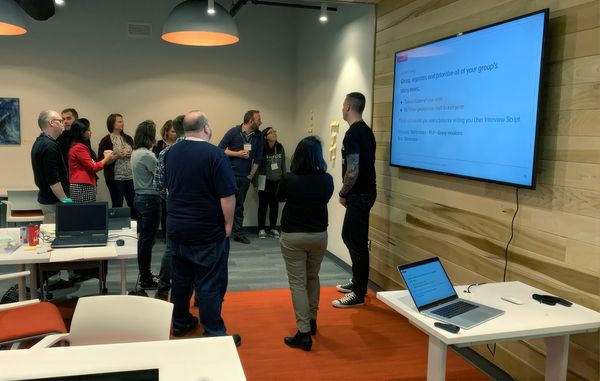
Ways to build a shared understanding of UX on your team
Each of these is something a team can start on its own.
-
Agree on what UX means for your product. Talk through what each person has noticed.
-
Treat AI output as a starting point. Use it to open a conversation and a round of testing.
-
Share findings in participants' own words. Recordings and quotes let people who weren't in the room see and hear what happened. Include the reasoning behind each decision along with the findings.
-
Bring the people who will keep the product going into sessions. Give them more of each session as they go.
-
Ask whether each decision rests on evidence or opinion. Size the research to match what's at stake.