
My son, at the time a Grade 10 student with marks in the 90s, was called out at school for using AI on a business assignment.
He wasn't interested in answering the questions, so he pasted them into an AI chat tool, copied the answers back out, and submitted them. The teacher flagged it almost immediately because the writing didn't match his usual style, grammar, or structure.
He wasn't trying to cheat. He just didn't want to answer the questions
We sat down that weekend and talked it through. There are two things here that look similar from the outside:
- Using a tool to explore something he's already trying to understand, or to work through a problem he has some grounding in
- Generating an answer to a question he has no grounding in at all
The first one is research. The second one hands him output he can't evaluate. He can't tell whether the answer is any good, because he doesn't know enough about the subject to have an opinion about it.
The second one is what costs him, separate from whether a teacher catches it.
I asked him how much he was actually learning about AI at school, and his response was roughly one class that covered what it is.
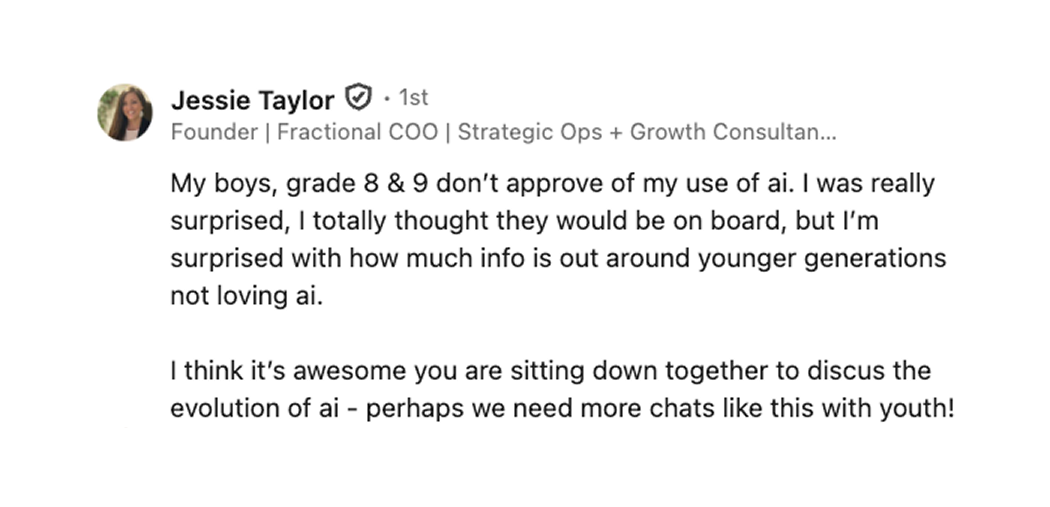
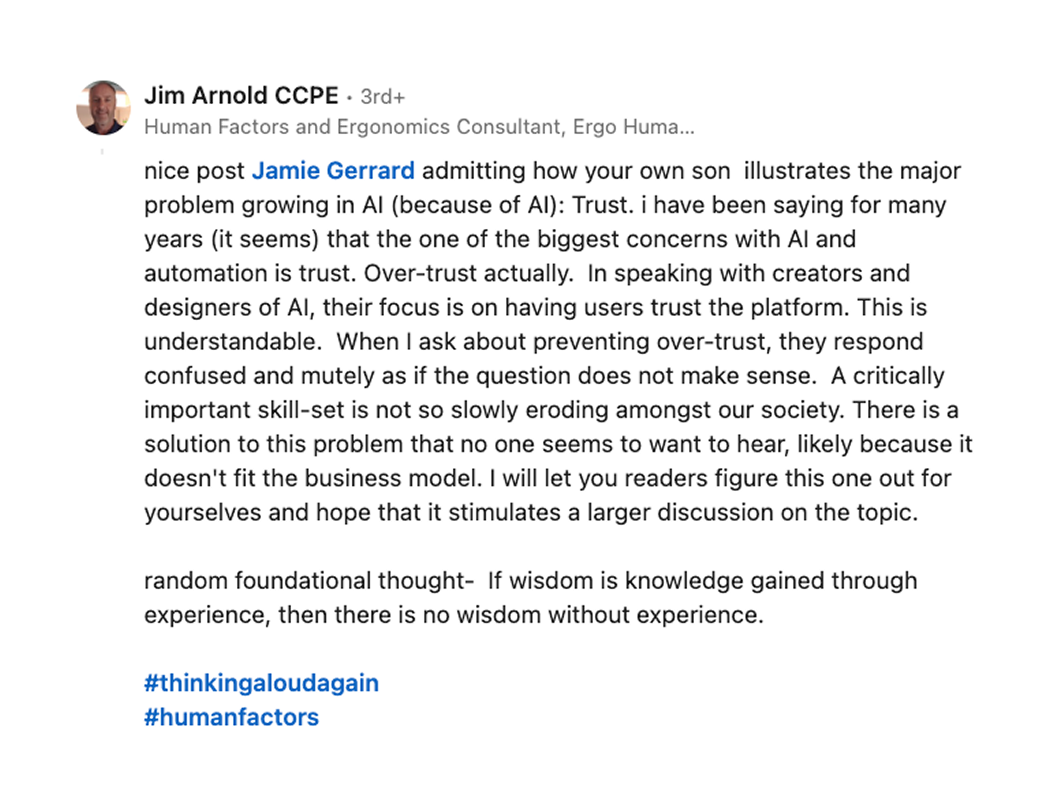
I wrote about all of this on LinkedIn, in one post and then a follow-up, and a lot of people engaged. What surprised me was how few of the comments were about my son. People were telling me about themselves.
We started a weekly project
We ended up sitting down together every weekend for four weeks. I walked him through the fundamentals of tools like Claude and ChatGPT, focusing less on the exact steps for any specific product and more on using them as something that helps him think.
A few things I stuck to:
- One new concept at a time, so he understood what was happening and not just what came out
- We worked on something he already cared about, a Warhammer 40k campaign we built together. He plays Ultramarines, I play Necrons, and lose almost every game
- Learning happens in passes, not in steps 1 to 3. We came back to the same idea at a deeper level instead of finishing it and moving on
- The tools were how we practiced; they weren't the subject
More advanced pieces came later, like setting up a project and using instruction files to give the tool structured context to work from, but none of that was useful at the time we started.
I struggled with academic classes in high school myself, so my approach with him was about support and meeting him where he was. He wasn't keen at the start, and his main point of reference for AI was that it was taking jobs away from people working in the game development industry, which is a fair concern when something is still new and people are figuring out the longer-term impact.
What I noticed when he used AI on his own
A few weeks in, he used AI for an English presentation slide. It was the first time he applied any of this without me sitting there. He wrote a prompt with more context in it and asked the tool for its sources. He used what came back to push for a better version, then rewrote the content in his own words.
On the surface, all of it was right.
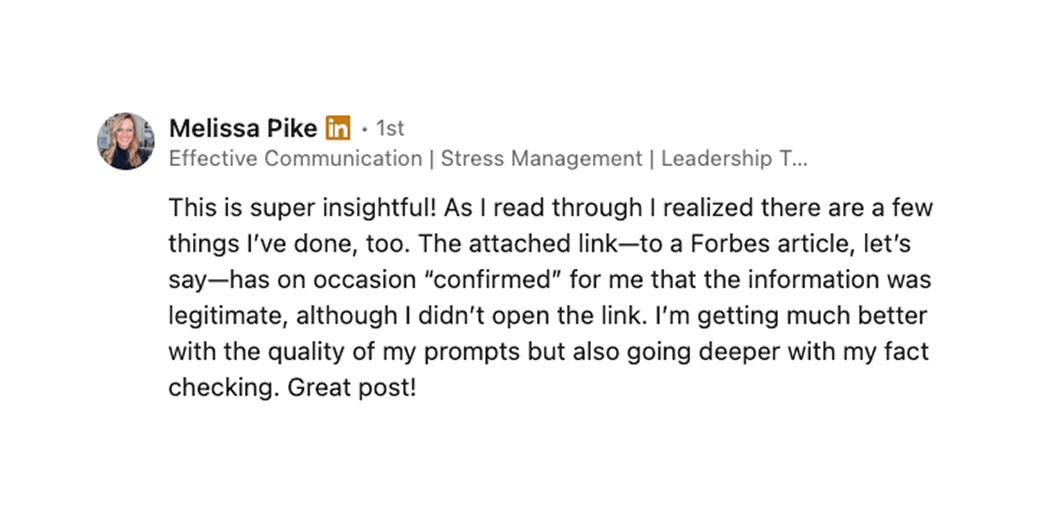
Then I watched what he was doing with the sources. He wasn't reading them; he was reading the presence of links as proof that the AI was being trustworthy. The same thing happens when he uses Google. He treats the summary at the top of a search results page as the answer, because the links underneath are a credibility signal for him.
This showed up again during one of our sessions together. As he typed, the spell-check tool I have installed underlined a few words in red. He clicked accept on each one without reading the correction. The red underline was the authoritative signal he looked for and trusted.
He's not evaluating the output; he's deferring to the form it takes. Sources, clean formatting, confident language, a tool marking something as wrong. Those are easy to produce, and none of them tells you anything about whether the answer is right.
The harder skill is knowing when to question something
Teaching him to write better prompts took a session. Teaching him to know when to question what's in front of him will take years, and it goes well past AI. A cited link, a generated image, a confident paragraph, a number in a slide someone else built.
When he was younger, we taught him about online safety early. The old line was to believe nothing you hear and only half of what you see. What I tell him now is closer to: believe nothing you hear or see, and then check the source.
Writing that down sounds cynical, but in practice it's a habit of asking what something is missing before asking whether it sounds right.
The argument against all of this
Not everyone agreed, and the pushback is worth taking seriously. Ben Cusack put it plainly: "Do as much as you can with AI, not how little. As that is the real world skill."
He's right that hedging your bets doesn't help anyone. My son should use these tools constantly, and he does. Where I'd separate from that is on what "as much as you can" means. Producing more, faster, is easy. Being able to tell when what came out is wrong is the part that's actually scarce, and it doesn't arrive with the tool.
He wants to be a designer, and I can't tell him what that will be
He's told me he wants to work with me after school. I can't tell him what the design profession will look like by the time that happens, which is why I've recommended he load up on communication, business, entrepreneurship, and design classes for the rest of high school. Those carry across almost any direction he ends up taking.
I'm biased on the electives. I took an entrepreneurship elective in Grade 12 and started my first business right after high school because of it. That one class shaped a lot of what came next. Communication has held up just as long, through government work and then through my marketing agency years spent pitching and presenting.
What worked for us
Several people asked how I ran this, so here's where we started:
- Start with something they already care about. A hobby, a side project, anything with no grade or deadline attached. Judgment is easier to build when being wrong costs nothing.
- Separate the two uses out loud. Exploring something you already know a bit about is different from generating an answer you have no way to judge. Name which one is happening before starting.
- Ask what the output is missing before asking whether it's right. Sounding right is the default; missing something is the useful question.
- Have them open one source, all the way through, at least once. The gap between what a link is cited for and what it actually says is the fastest way to break the habit of trusting the citation.
- Introduce one concept per session and come back to it. Depth on one thing beats coverage of five.
It's better he builds this understanding now at home, with his own questions, than to have it catch up with him later at work.