A career remixed, not climbed
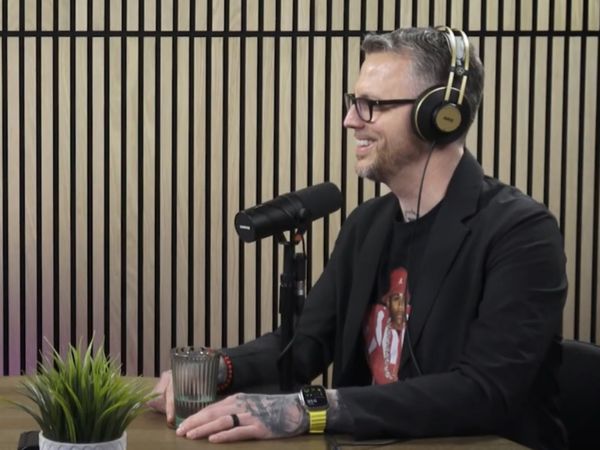
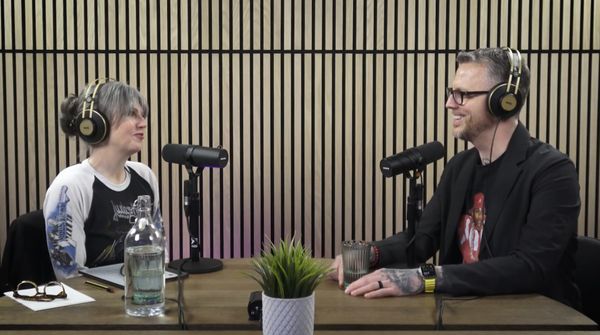
I shared part of my story on Carrie Forbes' podcast, The Disruptive Jam, in an episode called Hustle + Flow.
At one point, Carrie asked me why I'd leave an agency that was building up and going well. Why the need to bet on myself?
Other people have personal bucket lists: climb this mountain, do this hike. I look at my career as a bucket list. When I realized I had accomplished all the things I wanted to do at the agency, I looked for other ways to grow that list. My career hasn't been linear. It's been more about what experiences I want, and how I get to have them.
Growing up in Dartmouth meant working toward what I wanted
I always joke that I was born and initially raised in Halifax, but Dartmouth is really what made me who I am today. I grew up from very humble beginnings. Not having access to the newest and greatest toys meant that if I wanted something, I had to work toward it. We were out collecting cans to sell to buy the next thing we wanted.
Halifax opened me up to creativity and a lot of art influences early on. When I moved to Dartmouth, a lot of the people in my community came from similar upbringings and similar home lives. That environment pushed me toward a lot of what I would later do in business.
Hip hop drew me in through its storytelling
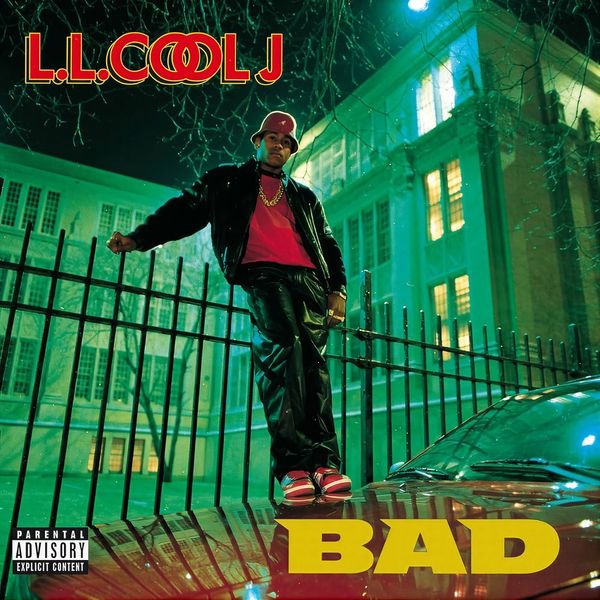
Music has been a soundtrack to my life. I can associate certain moments with what I was listening to at the time. The first real rap song I gravitated toward was LL Cool J's "I'm Bad," and Bigger and Deffer was the first rap album I ever bought.
I still remember breakdancing on cardboard in downtown Halifax. What drew me to hip hop was the storytelling, and the experiences of the people making the art, whether that was music, breakdancing, or graffiti. The story and the message are what made me think, "I relate to that."
That still shapes how I run my business. I don't offer services because they're the most profitable. I look at what will have a big impact on the lives of the people I'm working with.
Volunteering at a community center led to my library job
Art and creativity have always driven me, from spending hours drawing comic books in my room as a kid.
When a new community center opened in the neighborhood I grew up in, I asked to volunteer. I knew a lot of the kids in the neighborhood, and they could use an outlet. I offered to run a drop-in night for free, which eventually led to me working in the library.
If you'd asked me back then whether I'd ever have a career in a public library, the answer would have been no. It wasn't a career path that came to mind. A mentor guided me to it: "If you like doing these things, you should consider a career working for public service in the library."
My first role was library clerk, a very entry-level position. Alongside my core responsibilities, I was still able to do the creative things I wanted to do in the community with the kids. We had drop-in nights in the evening, art classes, and tabletop gaming. I ended up gravitating toward skills I didn't think were important at the time: research, people, communication, and understanding a person's story and context. Those became early pillars for what I would later do.
I got a senior library role at 26 by not waiting for permission
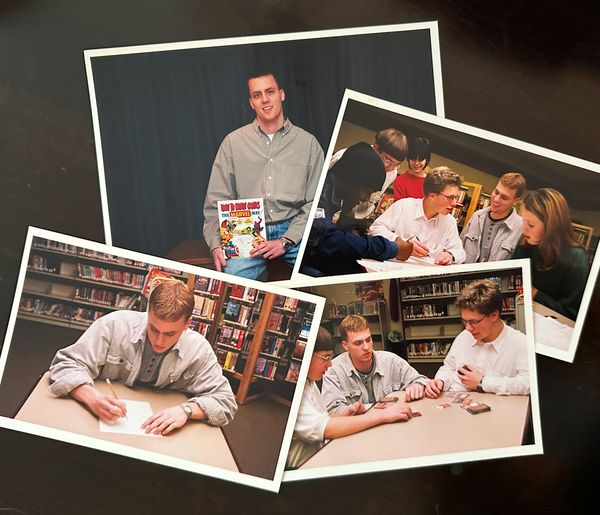
At the libraries, there's only one of certain roles per branch, and the people in them often stay for almost their entire career, until retirement. At 26, I landed the most senior role I could get with my education at the time. I got it over many peers who were a lot more seasoned, and it caused a bit of disruption.
I got there the same way I'd done things my whole life. I didn't wait for permission, and I took the initiative to do things other people wouldn't. I took shifts at branches people didn't want to go to. That experience gave me the confidence to apply.
It was the safe path. I could have stayed in that position until I retired.
A scanner in a college lab changed what I thought was possible
When I was back in school, the internet was fairly new. We had a multimedia class, and one lab with a scanner you had to sign up to use. I realized I could take all of my art and drawings, digitize them, and make a website. I could make something other people could see.
I didn't think of all the reasons why I couldn't do something. I came up with the one reason why I could. I was going to bet on myself and make it work, with no plan B.
Sharing this with a colleague at the time, I remember them saying, "Jamie, you're young enough or early enough in your career where you could make a mistake and still be okay." That gave me the fearlessness to be more disruptive in how I thought about careers, learning, and opportunities.
Joining a four-person agency meant building as we went
Moving into the private sector, I went from an organization full of brilliant people I learned a lot from to an agency that was four people, basically in a garage. Everyone was building and figuring things out for the first time. It was like building the bridge while running across it. I took the lessons I'd learned at the library and adapted them to this new world. The agency grew to be what it is today.
I gave myself 14 months to prove I could do it again
I've always wanted to be my own boss. In high school, I put together a business plan in an entrepreneurship class, and straight out of high school, my first business was a gaming club for youth.
Having been with the agency since the early days almost gave me a false sense of security. Before going out on my own, I wanted to see if I could recreate the successes I'd had there somewhere else.
So I went to a startup. It was a complete gamble. I probably could have stayed at the agency for a very long time. I gave myself 14 months to do it, and to my surprise, I did it in 8.
That gave me more confidence. I had one other quick stop after that, then started 20/20 Digital. It reinforced that I could do this on my own terms, with the same dedication I'd had working for someone else.
Success for me isn't measured in money
I've been in roles with a lot of financial motivation and incentives to be successful. For me, success isn't a dollar sign or a number or a goal. Am I rewarded by the work I'm doing? Am I making an impact? Is it bettering the lives of the people I'm working with?
My business is people. Technology lets me be a bit more creative in helping those people and organizations do the things they want to do.
Three mentors helped me at each step, and I give that time back
Early on, I learned the value of having a mentor: someone experienced in the things I was interested in, when I didn't have the structure or the means to figure them out on my own. Three people stood out at pivotal points in my career.
The first coached me to go back to school and work in the libraries more formally.
The second was closer to the end of my public service career. She was very good at giving me more context around a scenario. Not just looking and hearing, but listening and reading between the lines.
The third was someone I reached out to through an organization when I was moving into digital. They gave me an hour a week to answer questions and help me work through specific scenarios.
Having a mentor meant so much to me that giving back has been a big theme throughout my career. I have one-on-one coffee chats through connector programs for people who are new to the community. Some relationships from the college have carried on for years, some on a semi-professional basis and others more informally. They also give me perspective on things I might not otherwise have thought about.
The best way to learn about something is to talk to somebody who's actually doing it.
A yearly review keeps my career bucket list up to date
At the end of my business year, I look at what worked well, what didn't, what was profitable, what wasn't, what I enjoyed doing most, and what I enjoyed least. When that happens in December, January is my month of reconnection.
The work I enjoyed most may not have been the most profitable. But if it's what I really enjoy doing, I'm going to try to do more of it. If I had great conversations through the year where I identified a need a team or an industry is going through, and I have a background in it, I can make that a service for the next year.
That constant self-reflection keeps me evolving my business, my interests, and my skills. There was one point in my career where I could design a strategy for a luxury golf website in a matter of days, because I'd done so many of them. Now I look at things through a much broader scope.
The 20/20 in 20/20 Digital, the name of my former company, came from hindsight and a clear path forward. In my early days as a consultant, I was often brought in to get a project back on track, or to help a team that had learned some lessons and wanted a different way of thinking.
Advice for anyone thinking about going out on their own
Carrie asked what advice I'd give to up-and-coming entrepreneurs thinking about taking the leap.
-
Cover your base. If you have a job and you're thinking of becoming an entrepreneur, look for ways to experiment and hedge some safe bets first. I wouldn't recommend quitting your job and then going to do the thing you're aspiring to do.
-
Check whether there's a market. Are other people doing it, and doing it successfully? What does that look like for them?
-
Learn the business side, not just the creative piece. When my son was 14, he wanted to be a content creator and had a YouTube channel. He took the time to understand the analytics, viewership, how to cut a video, and even what the thumbnail should look like. He ended up educating me on how the analytics work.
-
Work on your business, not only in it. You spend a lot of time working in your business, but you also need to work on it. When I talk with new entrepreneurs, that's the biggest aha moment.
-
Talk to someone who's doing it. A mentor who has done what you're interested in can help you work through it.
Carrie ended the episode by asking for my top songs. LL Cool J's "I'm Bad" is definitely number one. It still gets me motivated, all these decades later. Tupac's "Changes" is number two, because change has been a constant theme in my life. Anything from Wu-Tang Clan's 36 Chambers is still in heavy rotation, and lately I've been listening to lo-fi beats in the office, or at home with the dogs downstairs.