"Can you fix our UX?" is a question I get asked all the time
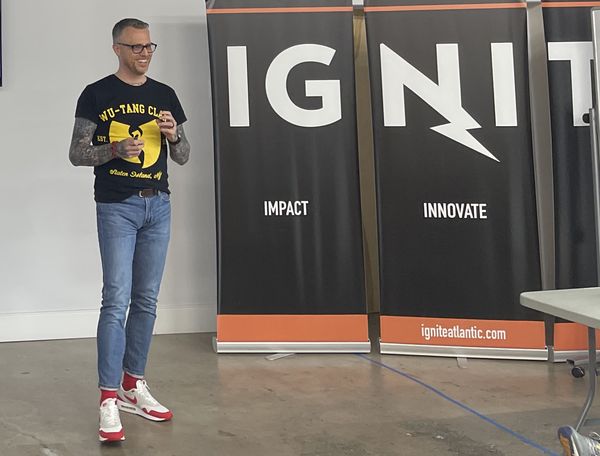
At the IGNITE Atlantic Summit Series, I gave a talk built around that question.
My answer is always yes. Yes, I can fix your UX, whatever that means to you. The reality is that the full answer is "it depends," and it's not one most people like to hear.
"UX" means something different to every team I work with
Before I can fix anything, I need to understand what UX means to the person asking, and to their organization. Sometimes it means the UI: the buttons, the images, the writing. Other times it's a deeper question about how and why decisions were made for a product or service that's being built, or already exists.
Fixing UX isn't only about making things look good. It's about understanding how people actually use your product or service, compared to how you think they use it.
That gap is common with founders. A founder sees a need in the market and builds a product or service around it. That's a good starting point, but you still need to keep talking with your customers and potential customers, and keep learning from them.
UX is more than the screen
The complete experience. Every place someone can find you or learn about you: your website, social channels, an article written about you, or a review of your company. Small details matter here. Think of a door with a pull handle on a side you have to push. The handle tells you to pull, so someone adds a sign that says "push." These are called Norman doors, and they frustrate almost everyone. A small moment like that can set the stage for everything after.
More than visuals. Sometimes a team wants a visual refresh, and that's part of user experience. There's usually a deeper question of why decisions are being made. Accessibility is a large piece of this, and so is how people feel. A pop-up asking for newsletter sign-ups the moment someone lands on a homepage, before they know anything about you, makes it about you and not the people using your site. When it pops up again on the next page or the next visit, you might collect some email addresses, or you might frustrate people so much they never return. Think it through as a strategy, not a tactic that trades a short-term gain for long-term frustration.
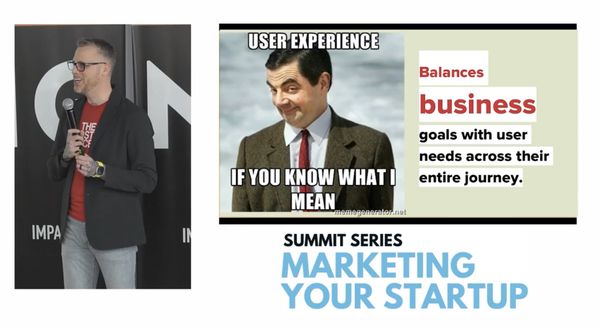
Business goals. What are your business goals, and how does the entire journey support them?
Finding what's behind the request starts inside the team
When I start with a team, I need to understand what I'm stepping into. I also recommend teams do this themselves. If you're part of a larger team, use a buddy system. Have someone ask you questions and share their perspective on your product or service, so you get views that aren't your own.
What a team sees as a strength can point to an opportunity. One team shared that their customers appreciate when they take time to explain each step of the process, especially for complex cases. I read that and hear complexity. The team is spending time and resources walking people through a process, and that's worth a closer look.
For any project, I look at whatever information is available. Not every company has the same data, and not all data is equal. Data can be made to tell almost any story, depending on the questions you ask. A team of one or two can start with the buddy system. A broader team can use surveys, feedback forms, Google reviews, and website analytics. Look at them together, not one at a time, so the decision rests on everything you have.
Best practices only help when they fit how your team works today
You can search for UX best practices and find top-ten lists that will teach you things you hadn't thought about. You still need to connect them to where your organization is today. That means looking at the people and processes involved in decisions, and at the team's capacity and comfort with technology. Look at what you can do today, then plan for tomorrow.
Systems are often where that shows up. In a survey I sent to a team I worked with, one response said that using multiple systems made it hard to keep track of everything and slowed the team down. That time could go to supporting customers or growing the business.
Inside an organization, tools often start in one place, and new pieces keep getting stitched on over time. I call it Frankenstein's monster: a customer database half-baked into another system, stitched into the website. The monthly cost isn't only licenses. It's the hours people spend working in and managing those systems. When a team brings on someone new, they often can't explain why things are done the way they are. It made perfect sense when they first set it up.
Looking past surface fixes to the cause is never an easy conversation, especially when you're very invested in your business.
Recommendations work best when they fit the team behind the product
On a Nova Scotia government project bringing health services online, I came in after the project was already underway. The team knew something was wrong but not quite what. Having done this a long time, I could look at the product and pick out 20 things in about an hour.
I still had to go back and do the research: talk to the people involved, and learn what the team was doing, how they worked, and what was most effective for them. That's what let me make confident recommendations specific to the project and to the team supporting it.
That second part is often left out. Yes, I can fix the UX on the surface. We can also look at how your teams work together and how you decide what comes first.
Unclear navigation and long forms come up most often
Out of five conversations I have, these come up in four.
Unclear navigation. The labels you use to describe your content shape how people look for it. A word or phrase you think is clever may not match how people think about finding information. I reviewed a website with about 10,000 unique visitors a day, and the team was very proud of their site search. I took that as a red flag. Why were people searching so much, instead of finding content through the site? In my testing, it was quicker to use Google to find content on their site than to use their own search. If you sell products and your label says "Product catalog," some people won't know what it means. "Shop" is clearer.

Long forms. Forms are how websites collect information, take orders, and receive feedback. Think about filling out a form on your phone that runs two or three screens long. The ideal is that someone gives you their full attention until it's done. The reality is a phone call, a distraction, or a jump to another page. If you sell online, look at how many people drop off at checkout, or at registration if you require it, which you shouldn't. The old marketing thinking was to collect as much information as possible to build customer profiles. The current thinking is to collect as little as possible up front, then keep engaging people over time.
A website is never finished
A few years ago, I worked with a legal tech startup on the first version of their product. They've had great success and are seeing real growth in usage. They liked working with us enough that we later did a rebrand and website refresh for them. We were clear up front: when the website launches, that's the start of the dance, not the end.
Ongoing testing can seem overwhelming. A set-and-forget website will be less successful in the long term than one you keep refining. A basic test is to have someone unfamiliar with your business land on your homepage and ask them what you do. If they hesitate, that's an opportunity. Ongoing testing can start with a couple of hours a month and build from there.
Services can be tested before they launch
If you don't sell a digital product, testing still applies. On a large initiative with a credit union, our work focused on reimagining its service experience for members. I used what I call service scenarios: a creative role play that recreates an experience from the point of view of a first-time person and a returning person. You can try out a service and test it early and often this way, even before it launches.
Ways to find out what "fix our UX" means for your team
When someone asks if I can fix their UX, my answer is yes, but it depends. Each of these helps a team work out what it depends on.
-
Ask what UX means to your team. Write down whether you mean the interface, the decisions behind it, or both.
-
Start inside your team. Use a buddy system to get views that aren't your own.
-
Look at your information together. Surveys, feedback forms, reviews, and analytics each tell part of the story.
-
Count the hours your systems cost. Include the time spent working around them, not only the licenses.
-
Check your navigation labels and your longest form. Use the words your customers use, and ask for less up front.
-
Treat launch as the start. Set aside a couple of hours a month to test and refine.