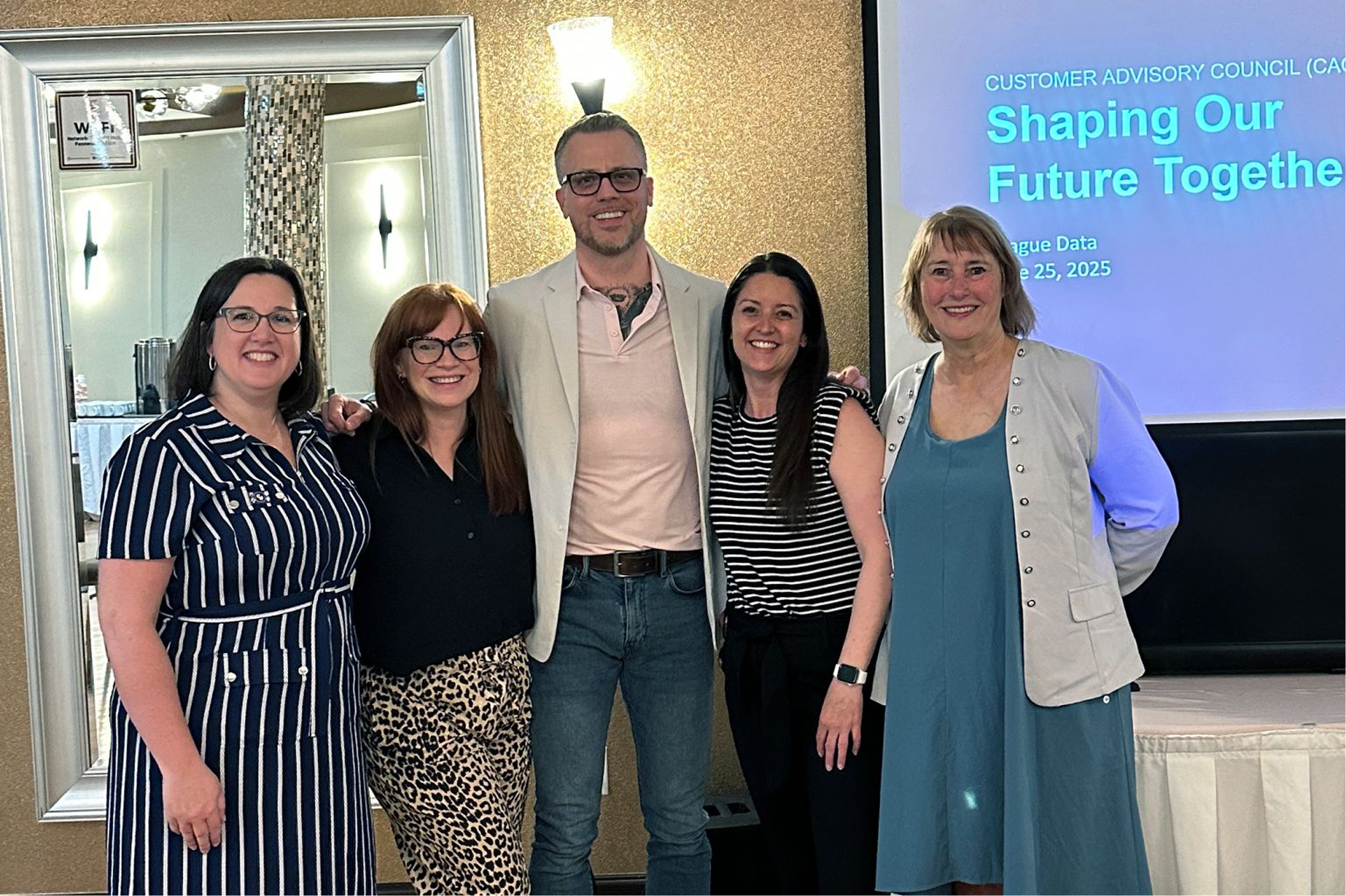
Bringing every size of credit union into roadmap planning
League Data is a co-operative that provides technology and support solutions to credit unions across Atlantic Canada. By buying and delivering technology on behalf of all of them, it gives its credit unions a united voice, greater buying power, and access to products and services that would be out of reach individually. For many of them, it effectively serves as the technology function, covering everything from vendor management and cybersecurity to implementation support and technology advisory services.
Its credit unions vary widely; some are small community institutions running lean, while others are larger regional operations with their own IT teams. As League Data planned a multi-year technology roadmap covering digital banking, lending, CRM, and data, it wanted a way to bring that full range of perspectives into the planning process itself rather than checking in after a decision was made.
Feedback channels already existed: support tickets, client conversations, and the Engagement team's regular contact with credit unions. What League Data wanted alongside them was something structured and repeatable, so input could be gathered consistently and weighed the same way every time.
For that input to be useful, it had to:
- Reflect credit unions of all sizes, not just the largest
- Separate what affects members from what affects the team that serves them
- Give every participant equal weight when setting priorities
A customer advisory council was the answer. Building one that produced signal rather than just a lot of input was the real work.
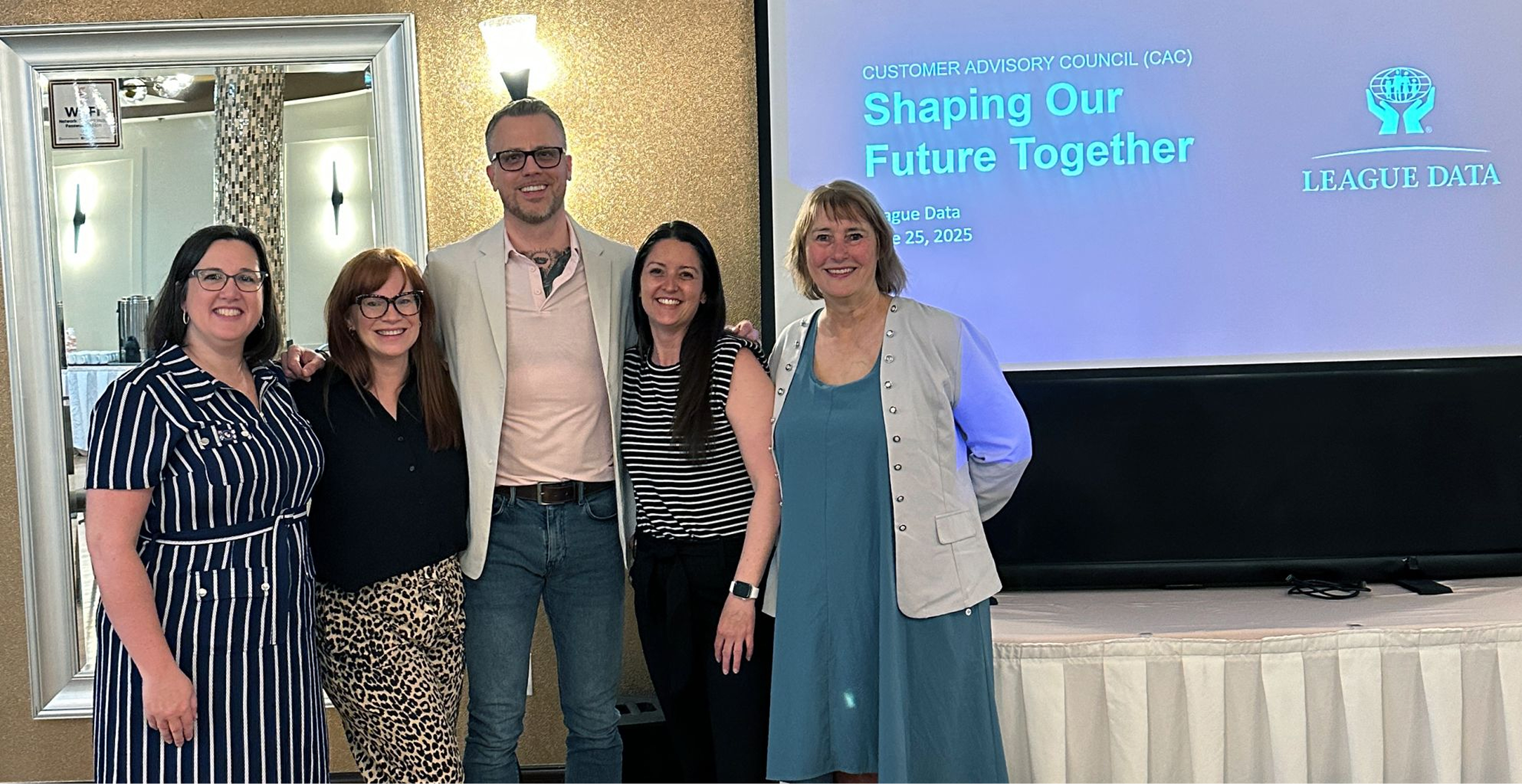
Planning built backward from the workshop date
League Data's team and I worked through the overall structure, the framing, and the council framework. I designed the in-person session and trained the team in the facilitation approach, so the day belonged to them.
We set the date for the first council meeting and scheduled everything backward from it. We spread internal planning and training out, pacing it to fit the team's existing workload rather than compressing it into a sprint. That pacing was deliberate, allowing each session room to settle before the next built on it.
Scope and confidentiality settled before anyone was invited
We didn't start by designing a workshop. We started by defining the scope so participants knew what was on the table before they agreed to join.
Before anyone was invited, we answered five questions.
- How large should the council be?
- How would participants be selected?
- Which topics belonged inside it, and which were outside?
- What could participants share with peers, and what had to stay private?
- How would input feed back into decisions?
Those answers were incorporated into a lightweight Terms of Reference.
In scope: roadmap priorities, feature requirements, and an understanding of operational challenges.
Out of scope: vendor selection, pricing, and implementation timelines.
Anything specific to an individual institution stayed in the room. General insights and themes were fair game for informing decisions.
Documenting the confidentiality line up front meant nobody had to guess where it sat.
Selection criteria that balanced geography, size, and function
Representation was one of the reasons the council existed, so the selection criteria did much of the work. Three axes had to be balanced at once:
- Geography, because Atlantic Canadian credit unions serve distinct regional markets
- Credit union size, so small, medium, and large each had a voice that held its own in the room
- Functional expertise spanning operations, technology, member experience, and executive leadership
Rehearsing the hard moments before the first session
The Engagement team needed to run the session themselves. That was our goal from the start, and it shaped how everything leading up to the workshop was designed.
I built a series of internal working sessions, each focused on one aspect of the council and each building on the previous one. They were designed around how the team already worked rather than how I would have run them.
The sessions worked through the situations the team would encounter on the day:
- A participant goes deep on something specific to their institution
- More assertive voices carry a discussion further than quieter ones
- An important topic comes up that falls outside the council's scope
- Different institution sizes point to different priorities
I brought decision trees, communication templates, and escalation paths into those sessions, and the team practiced with them until the responses were their own. By the morning of the workshop, the team had approaches they had already used.
Designing a day where every voice counts equally
The session brought together more than 25 credit union leaders from 11 institutions for a full day.
Participants included vice presidents of technology, directors, branch managers, and other senior roles, so the room held both the people setting the technology direction and the people running the branches it lands in.
The selection criteria ensured structured coverage: every size category, region, and function was represented. We chose hands-on table activities over presentations and open discussion, so input came from every participant rather than from the few most willing to speak.
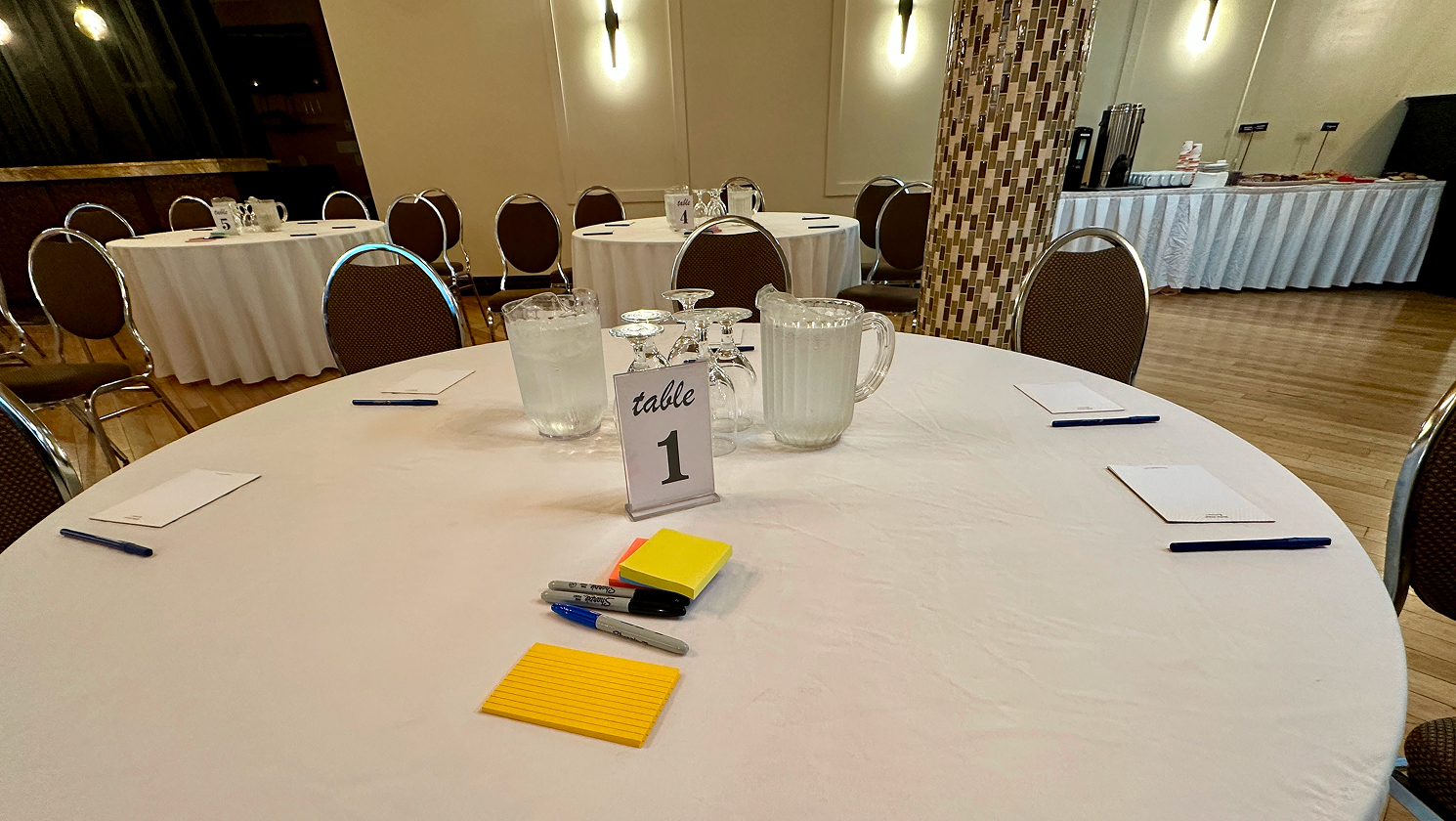
- Rotation stations. Four stations, one per technology area, 20 minutes each, with the same question set at each stop.
- Member and team experience asked separately. The two sometimes align and sometimes point in different directions. A feature members love can create backend work for the team, and both perspectives matter.
- Table champions. One per group, keeping the discussion moving and ensuring everyone contributed.
- A table switch after lunch. Mixing tables put small and large credit unions in front of each other's workarounds.
- Individual priority marks. Each participant marked their own top priority at each station before any group discussion of the vote.
- Silent dot voting. Eight dots per participant, two per area, cast individually after the stations, with no discussion during the vote, so every participant carried the same weight.
- Commitment cards at the close. One insight to take back to their credit union, one problem to solve first, and one way to help personally.
I spent the day in the room with the Engagement team, providing feedback between activities and staying out of facilitation so they ran the sessions for their credit unions.
From a day of raw input to findings the team could act on
The day produced input in five forms:
- Station responses
- The priority each participant marked themselves
- The group vote
- Exit surveys
- Commitment cards
I organized everything we collected into a single set of findings. Station responses were grouped by the underlying need rather than by the words people used, then cross-checked against the room's vote, so the themes had to hold up against an independent signal rather than my reading alone. The Engagement team reviewed the groupings before the report was written.
Exit surveys and commitment cards were included as well, which mattered because participants used them to record things they hadn't said out loud during the sessions. When a grouping was a judgment call, I noted it rather than glossing over it. The result was a report that identified what the room prioritized, how the themes cut across all four areas, and what each finding meant for the technology roadmap. The report was sent back to the participating credit unions, including what they told us hadn't worked.
Credit unions of every size shared the same challenges
Accounting for different credit union sizes was one of the founding reasons for the council. What the day surfaced was how much those credit unions already had in common.
The credit unions in the room were very different, yet the same themes kept appearing across every size category. A small credit union's member experience problem mirrored what a large one was working through. Different surface details, same underlying issue. Because the room heard it together, it registered as a pattern rather than as one institution's anecdote.
One participant used their commitment card to write: "We are not alone in our challenges."
The vote put integration at the top of the priority list
The voting produced ranked priorities across all four areas, based on structured input from the full range of credit unions. One pattern held across the room. Integration was the top-voted item in three of the four areas and appeared in all four.
Several of the highest-priority items turned out to address more than one problem at once. In several cases, a credit union asking for one thing at the lending station and something else at the data station was describing two sides of the same gap. Participants saw it happening in the room. One put it this way: "The focus was on identifying challenges and identifying solutions that may solve more than one issue."
The council gave integration structured backing from credit unions of every size.
A standing voice, not a one-off consultation
The council was never intended to rewrite the roadmap. It was built to give credit unions an ongoing voice in how priorities are set. Credit unions of every size now have a way to participate in planning, and League Data has a repeatable way to hear from all of them while decisions are still open. As one participant put it, "League Data is interested in where to focus by learning from different credit unions."
A council League Data runs on its own
What made that possible was the handover. Alongside the training sessions, we built the playbooks and tools for the Engagement team to fully take over the program: the framework, the question sets, the facilitation approach, and the process for turning a day of input into a report.
Since then, League Data has held additional sessions without me. League Data reports that those sessions were well received by the attending credit unions.
How to make every voice count in your own advisory council
The mechanics that made the day work are not specialized, and most of them are inexpensive to adopt.
1. Ask every group the same questions
Using the same question set at every station makes the answers comparable afterward. Separate the problems members run into from the problems the team runs into, because the two sometimes point in different directions and a room that answers only one will miss the other.
2. Have people mark their own priority before the room votes
An individual mark made before any discussion is a different signal from a group vote made after discussion. Capturing both lets you check one against the other.
3. Give everyone the same number of dots and cast them silently
Equal weight has to be built into the mechanics, or the most assertive voices carry the day. Silent voting is the simplest version of that, and it takes only a few minutes.
4. Group by the underlying need, not the words
In our station responses, credit unions describing the same gap rarely used the same language. Grouping by wording would have produced tidy categories that hid the pattern.
5. Close the loop in writing, including what didn't work
Participants gave up a full day, and they should see exactly what came of it, including the criticism. Our participants told us the day covered too much ground and that questions circulated in advance would have let them arrive prepared. One wrote, "Great conversations were had, but felt rushed." The first session was designed to cover broad ground. The sessions that followed zoomed in on fewer topics in more depth.